
Lacey Township City Directory Collection Leads
No official township city directory or complete reverse-directory run was located online. The strongest verified leads are the Ocean County Library’s e-resources and Wheeler Room, the Ocean County Historical Society, the State Archives, and Library of Congress material for Forked River. Their holdings serve different purposes: a newspaper may date a local mention, a directory or phonebook may place a name or address in a published volume, and an archive catalog may identify the series that needs an onsite request.
| Collection | Years | Where Held | Access |
|---|---|---|---|
| Asbury Park Press archive | 1905–2011 historical run; newer material listed separately | Ocean County Library e-resources | Remote or library access varies |
| New Jersey Courier | Dec. 10, 1852–Dec. 29, 1922 | Ocean County Library digital resource | Access follows the resource’s rules |
| Tuckerton Beacon | 1917–1987 | Ocean County Library | Later remote access is limited by copyright |
| Wheeler Room directories and phonebooks | Exact Lacey runs not published online | Ocean County Library headquarters, Toms River | Ask staff for title and year |
| Families of Old Dover | 1850 census-derived family booklets | Strickler Research Center | Research-center access |
The missing year list matters. A catalog cross-reference entry does not establish a complete Lacey publisher sequence, and no verified digitized Lacey city-directory page was found. Treat an unavailable year as a question for a librarian or archivist rather than as a gap to fill with an unverified duplicate.
The Wheeler Room’s Lacey Township Directory Trail
The Hugh B. Wheeler Room at Ocean County Library headquarters is the clearest directory lead because its published transcript names old city directories, phonebooks, yearbooks, maps, atlases, rare books, and historical pamphlets. A narrow request works best: give a surname or street, the desired year, and the relevant wording: Lacey Township, Forked River, Lanoka Harbor, or Bamber Lakes. Ask whether the item is alphabetical, telephone, school, or reverse/address format, and request the title, publisher, volume year, and page before treating a listing as evidence.
See the Ocean County Library’s Lacey e-resources listing before planning a search.
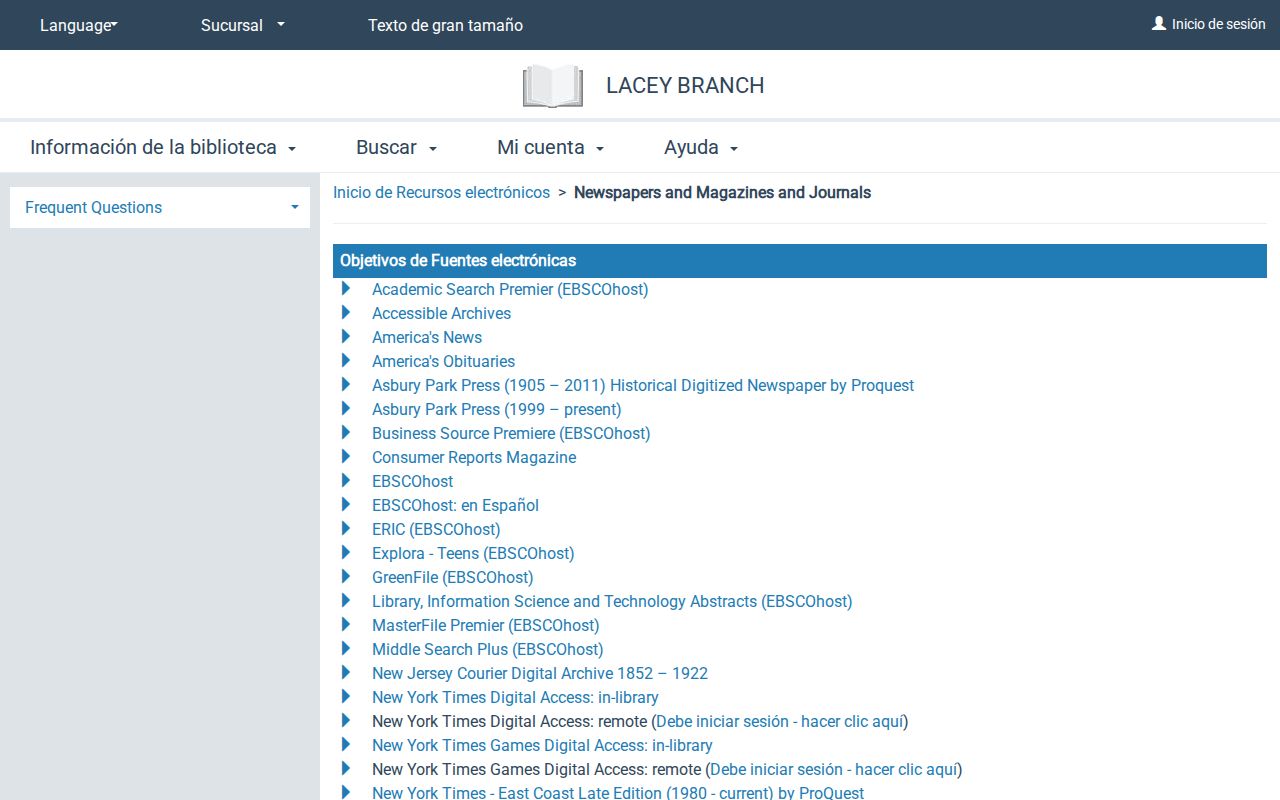
Library access also varies by product. HeritageQuest covers census, local histories, city directories, military, immigration, and Social Security Death Index material; Ancestry Library Edition is identified as an in-library resource. The library catalog supports keyword, browse, phrase, exact, advanced, and Boolean searches, but a catalog record alone should be read with its coverage and access limits.
Newspapers and Family Files Beside the Directory Book
For a Lacey Township city directory inquiry that has no confirmed volume, the library newspapers can provide a dated companion lead. The Asbury Park Press historical archive covers 1905–2011; the New Jersey Courier run is dated from December 10, 1852 through December 29, 1922; and the Tuckerton Beacon is listed from 1917 through 1987. Search a surname with a locality, road, school, church, or civic organization, then retain the issue date, page or article, database name, and whether the item was available remotely or only in the library.
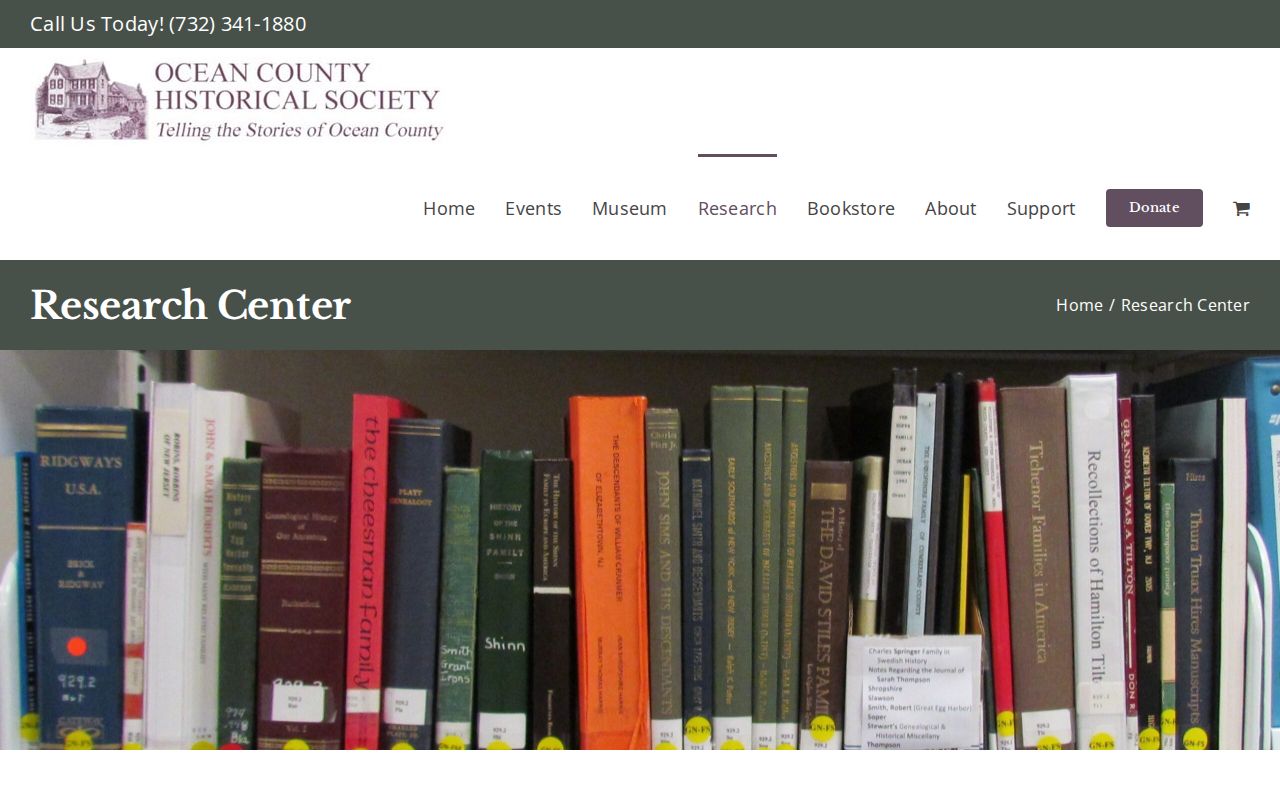
The Ocean County Historical Society’s Richard L. Strickler Research Center holds family names, maps, local publications, photographs, newspapers, and genealogical resources. It lists Tuesday, Wednesday, and first-Saturday hours of 1:00–4:00 p.m.; a nonmember visit fee of $2; a $5 specific-fact request; and a fuller paid research request at the published member and nonmember rates. Asking for an obituary, funeral reference, Bible entry, or booklet page is more specific than a broad surname request.
Open the Strickler Research Center’s research information to confirm current arrangements.
The Society’s Families of Old Dover project is a useful pre-1871 bridge, not a modern Lacey roster. It describes 1,793 Ocean County households and 604 head surnames in the 1850 census, with 229 booklets covering 1,529 households. Because Lacey formed from Dover and Union townships, the historical jurisdiction should be recorded exactly.
What to Record From a Lacey Township Directory Entry
Only an inspected volume can establish what an individual Lacey entry contains. The verified entry inventory is therefore a capture checklist rather than a claim about any named person: record the item title, publisher, year, town or coverage, page or address, and whether it is alphabetical or street/reverse. For a newspaper, preserve title, issue date, page or article, mention, and database. For an OCHS booklet, preserve surname, Old Dover household or census context, source list, date, and precise locality.
| Directory volume | Title, publisher, printed year, town coverage, page, and alphabetical or reverse format. |
|---|---|
| Newspaper mention | Publication, issue date, page or article, the precise local reference, and access condition. |
| Family compilation | Surname, census or household context, locality, source list, and whether it is a compilation rather than an original record. |
| Archive catalog result | Series title, county, earliest and latest dates, record group, and format such as index, microfilm, manuscript, or digital. |
- Criss-cross directory
- A street-ordered or reverse-style directory, if the holding institution confirms that format; it is different from an alphabetical listing.
- Householder index
- An index organized around a household or address concept. Confirm its scope and the printed volume’s instructions before relying on it.
- Abbreviation key
- The explanatory key printed in a volume that defines its shorthand. Photograph or transcribe it with the entry because notation differs by publisher.
Trace a Household Through Lacey Township City Directories
A city directory trail gains value by comparing dated sources, not by assuming that a listing proves a continuous residence. Keep the printed locality as it appears, since Forked River, Lanoka Harbor, Bamber Lakes, Dover, Union, Ocean Township, and Waretown can point to different historical contexts. Pair an address or surname clue with a census, deed, obituary, newspaper notice, or archive series that overlaps the same period.
- State the question and choose a surname, road, or address plus a narrow year range.
- Ask the Wheeler Room for a confirmed title, publisher, volume year, page, and directory format.
- Record the entry exactly and note whether it is a directory, telephone book, newspaper, yearbook, or family compilation.
- Compare the place and date with the appropriate federal or state census, newspaper run, or recorded-instrument trail.
- Keep conflicting localities or dates visible and request an original or permitted copy from the relevant custodian when the distinction matters.
A disappearance from one volume can reflect a move, a changed listing practice, a name variant, or a missing run. It does not, on its own, identify a death, a current address, or a person’s absence from the township.
Historical Geography Behind the Lacey Township City Directory
Local geography gives directory searching its necessary second vocabulary. Lacey Township formed on March 23, 1871 from Dover and Union townships. A portion along Oyster Creek went to Ocean Township/Waretown in 1876, and a southern Long Beach Island portion went to Island Beach Borough in 1933. A historic record tied to today’s Lacey area may therefore sit under a predecessor or successor name rather than under Lacey.
| Date | Recordkeeping implication |
|---|---|
| 1794–1865 | Survey, forge, road, and Bamber-development context supplies historical place terms for newspaper and map searches. |
| 1871 | Lacey Township formed from Dover and Union; earlier material may use those predecessor jurisdictions. |
| 1876 | The Oyster Creek cession can shift a later search toward Ocean Township or Waretown records. |
| 1933 | Island geography changed again when the southern Long Beach Island portion was ceded. |
Forked River history also has a Library of Congress path: HABS material describes a mid-eighteenth-century setting and later documentation, while related records mention saltworks, sawmills, iron, game farms, charcoal, and mercantile activity. Those terms can sharpen a period newspaper or archive-catalog search without turning a place reference into a residential claim.
Take a Lacey Township Search Beyond the Directory Shelf
The New Jersey State Archives adds the county and statewide layer when a library directory lead needs a more durable record trail. Its genealogical collections identify marriage material for 1848–1900, death material through 1900, birth corrections and delayed births, later vital microfilm, land and deed indexes, county mortgages, estate and probate records, naturalizations, court series, newspapers, federal and state census material, tax ratables, and name changes. The range describes possible custody and research paths; it does not mean every Ocean County record is digitized or that every name is searchable online.
For Lacey-area research, bring the historical jurisdiction as well as the modern place name. A request for a family near Oyster Creek may need Dover, Union, Ocean Township, Waretown, or Island Beach terminology, depending on the date. Ask the Archives catalog whether a result is an index, microfilm reel, manuscript, or digital item, and preserve the series title, county, earliest and latest dates, and record group in the research note. The Archives describes free public research through appointments or walk-ins as space permits, while reproductions and searches have record-specific fees that should be checked before ordering.
Library of Congress Forked River documentation can supply a parallel place-history lead. Its HABS and related Folklife records identify built and cultural context, including a 1750 structure, a separate 1820 house record, and 1984 cultural material. Those sources are valuable for refining search words such as Cedar Creek, Ferrago Forge, saltworks, sawmills, iron, charcoal, or Lacey Road; they do not establish who occupied a particular address.
When the Directory Year Is Not Available Online
The New Jersey State Archives is the escalation route for a local search that reaches a documented dead end. Its genealogical guidance identifies vital, land, mortgage, estate, naturalization, court, newspaper, census, tax-ratable, and name-change trails. It describes births from May 1, 1848 through December 31, 1925 and marriages and deaths from May 1, 1848 through December 31, 1950 among its historical ranges, with later series and indexes requiring record-specific confirmation.
Ask the holding institution whether material is indexed, digitized, on microfilm, in manuscript form, or available only onsite. The State Archives catalog can be searched by subject, department, document type, record group, dates, county, and series; it describes records holdings rather than a universal digitized people index. An absence from a public catalog result is not proof that a historical person or household was absent.